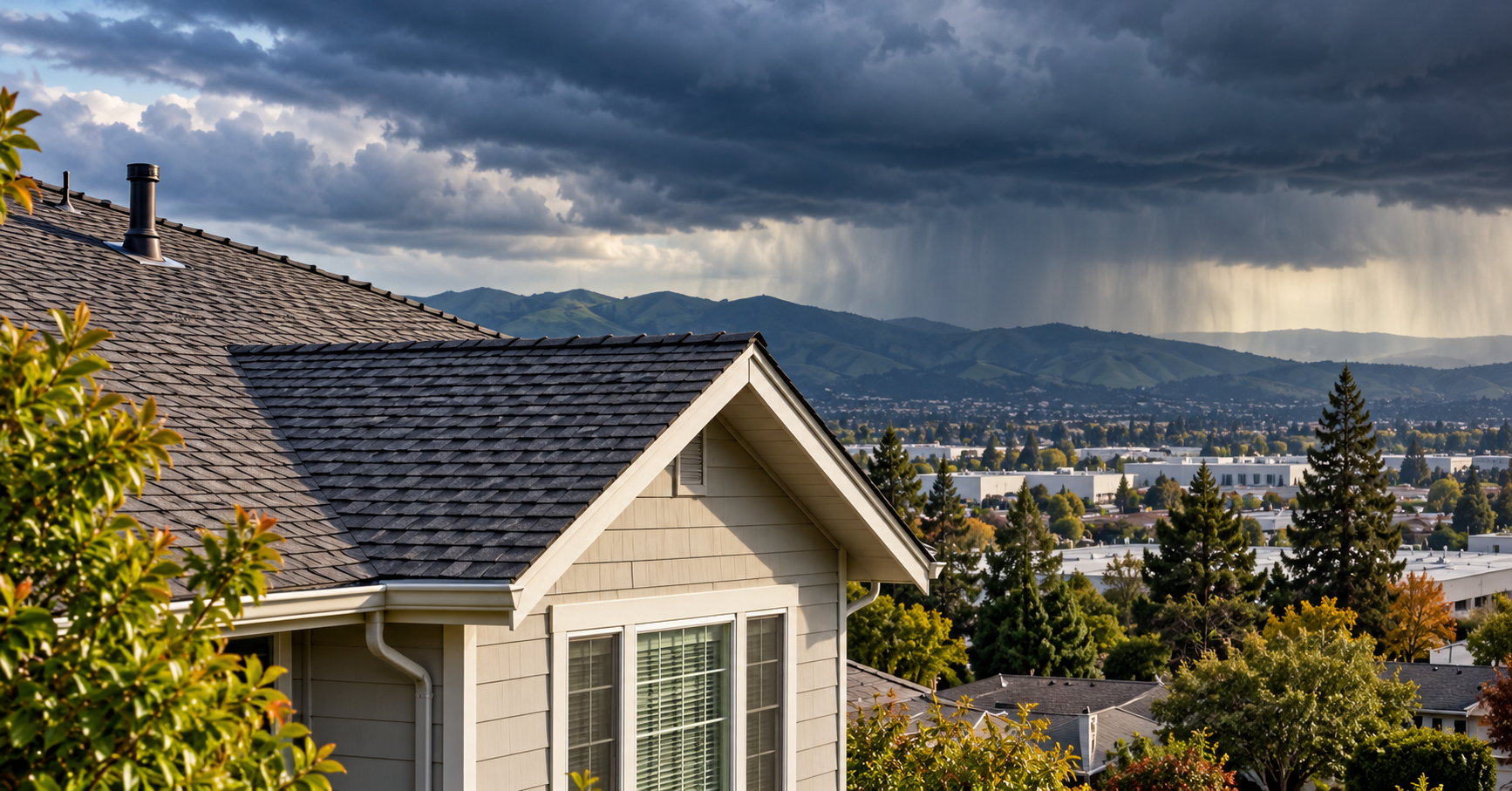
With El Niño developing, Bay Area homeowners and property owners have an added reason to make roof preparation a priority this fall. Now is the time to check gutters, drainage, shingles and any roof problem you meant to have addressed months ago—before winter weather arrives.
The NOAA Climate Prediction Center’s El Niño outlook says El Niño is strengthening, with a greater than 90% chance of a very strong event during fall and winter 2026–27.
That doesn’t mean anyone can guarantee unusually heavy rain in Concord or the East Bay. NOAA cautions that even with a strong El Niño, typical impacts become more likely but aren’t guaranteed in any particular location.
What it does mean is that now is a good time to find out whether your roof is ready for winter—before the first major storm exposes a problem.
For both residential and commercial properties, identifying a small roofing or drainage problem during dry weather can be much easier than discovering it when water is already getting inside.
7 Signs Your Roof May Need Attention Before Winter
A roof doesn’t necessarily need to be leaking today to have a problem. Small weaknesses can become much more noticeable after repeated rain, wind and wet weather.
Here are seven things Bay Area homeowners should look for before winter.
1. Missing, Cracked or Damaged Shingles
Asphalt shingles form the first line of defense against rain. Missing shingles, cracked shingles, lifted edges or visibly worn areas can allow water to reach the layers underneath.
You don’t necessarily need a new roof because of a few damaged shingles. Localized damage can often be repaired if the rest of the roofing system is in good condition.
But widespread deterioration can be a different story.
Meier & Sons Roofing provides roof repair services throughout Concord and the Bay Area for problems including roof leaks, damaged or missing shingles and flashing issues.
2. A Roof That’s Getting Older
Age alone doesn’t determine whether a roof needs replacement. Installation quality, ventilation, sun exposure, maintenance and the roofing materials all affect how a roof performs.
However, if your asphalt shingle roof is getting older and you’re beginning to see multiple problems at the same time, it may be worth having the entire roofing system evaluated rather than continuing to repair one problem after another.
An older roof that has performed well through years of Bay Area summers can still develop vulnerable areas that become apparent once sustained winter rain arrives.
3. Previous Leaks or Ceiling Stains
A stain on a ceiling doesn’t always tell you exactly where water entered the roof.
Water can travel along decking, rafters and other building components before becoming visible inside the home.
If you’ve had a leak during previous storms—even if it stopped when the rain stopped—it’s worth investigating before another wet season.
A previous leak is particularly important if the underlying cause was never identified and repaired.
4. Problems Around Flashing and Roof Penetrations
Some of the most vulnerable parts of a roofing system are the places where the roof meets something else.
That includes areas around:
- Chimneys
- Vents and pipes
- Skylights
- Walls
- Valleys
- Roof transitions
Flashing helps direct water away from these areas. Damaged, deteriorated or improperly installed flashing can create a path for water into the structure.
These areas may look relatively insignificant during dry weather but can become important when they’re exposed to repeated rainfall.
5. Gutters and Drainage Aren’t Moving Water Properly
Your roofing system has to do more than keep water from passing through the shingles. It also needs to move that water away efficiently.
Clogged gutters, damaged downspouts and drainage problems can allow water to back up or collect where it shouldn’t.
Before winter, gutters should be cleared of leaves and debris, and downspouts should be checked to make sure water can move away from the building.
For flat and low-slope roofing systems, drainage deserves particular attention because standing water can expose weaknesses that may not be obvious during dry weather.
6. You’ve Been Making Repeated Roof Repairs
One repair doesn’t necessarily mean you need a roof replacement.
If you’re concerned about an aging roof, previous leaks, damaged shingles, commercial roof drainage or whether your roof is ready for the coming winter, now is a good time to have it evaluated.
But if you’re calling a roofing contractor every year—or repairing several different areas of the roof—it may be time to compare the cost and expected life of continued repairs with the cost of replacement.
The least expensive repair today isn’t always the least expensive decision over the next several years.
7. You Don’t Know the Condition of Your Roof
This is particularly common when someone buys a home with an existing roof and doesn’t know exactly when it was installed or what work has previously been performed.
If you aren’t sure about the condition of your roof, finding out before the rainy season gives you more options than discovering a problem during a storm.
Roof Repair or Roof Replacement: How Do You Decide?
This is one of the most common questions homeowners face.
There isn’t a universal answer.
A roof repair may make sense when damage is confined to a particular area and the rest of the roofing system still has useful service life remaining.
A roof replacement or re-roof may deserve consideration when deterioration is widespread, the roofing system is reaching the end of its useful life, leaks are recurring, or repairing individual problems is becoming a continuing expense.
Meier & Sons Roofing provides re-roofing services for homeowners and commercial property owners throughout the Bay Area, specializing in asphalt shingles and modified bitumen roofing systems.
A good roofing contractor should be able to explain what they see, discuss the available options and help you understand why a repair or replacement may make sense.
If you’re considering roof replacement, fall can also provide an opportunity to evaluate the project before winter weather limits scheduling flexibility.
Commercial and Low-Slope Roofs Need Winter Preparation Too
El Niño preparation isn’t only a concern for homeowners.
For Bay Area commercial buildings with flat or low-slope roofing, drainage can become particularly important during periods of sustained rain.
Unlike steep-slope roofing, low-slope systems depend heavily on properly functioning drains, scuppers and drainage paths to move water away from the roof.
Before winter, commercial property owners and facility managers should look for signs such as:
- Ponding or standing water
- Clogged roof drains and scuppers
- Cracks, splits or open seams
- Damaged flashing around rooftop equipment
- Blisters or deterioration in the roofing membrane
- Previous interior leaks or water staining
- Debris interfering with drainage
Meier & Sons Roofing specializes in low-slope commercial roofing for Bay Area commercial properties.
The company also installs and services modified bitumen roofing systems, a roofing system commonly used on low-slope and flat commercial roofs.
A small drainage, flashing or membrane problem during dry weather can become considerably more important once prolonged rain arrives.
Having a commercial roof evaluated before winter gives property owners time to address maintenance or repairs before a problem becomes an active leak.
Why Waiting for the First Big Storm Can Be Expensive
Roof problems have an inconvenient habit of becoming obvious when roofing companies are busiest.
Once sustained rain arrives, a small vulnerability can become an active leak. Water intrusion can potentially affect insulation, drywall, ceilings, wood and other parts of the structure.
There is another practical advantage to acting earlier:
You have time to evaluate your options.
If a repair is appropriate, it may be possible to address it before winter.
If the roof needs replacement, you have time to review the scope of work, roofing materials, scheduling and cost rather than making decisions while water is entering the building.
If cost is a concern, Meier & Sons Roofing also offers roof financing options for qualified projects.
What Does El Niño Mean for the Bay Area This Winter?
El Niño occurs when ocean and atmospheric conditions in the tropical Pacific change in ways that can influence weather patterns far beyond the Pacific.
According to the NOAA Climate Prediction Center, El Niño is strengthening and is expected to continue strengthening through the end of 2026.
The important thing for Bay Area property owners is to separate preparation from prediction.
A very strong El Niño does not guarantee that Concord or any particular East Bay community will experience unusually heavy rainfall.
Weather patterns and storm tracks can vary substantially, even during strong El Niño years.
So we’re not predicting record rainfall in the Bay Area.
We’re saying something much simpler:
A strong El Niño is developing, winter is approaching, and now is a sensible time to make sure your roof is prepared for whatever the season brings.
A Simple Pre-Winter Roof Checklist
You don’t need to climb onto your roof to do a basic visual check.
From the ground, homeowners can look for:
- Missing or visibly damaged shingles
- Areas that appear worn or different from the surrounding roof
- Debris accumulation
- Clogged gutters
- Damaged or disconnected downspouts
- Sagging or visibly damaged roof areas
Inside the home, look for:
- Ceiling discoloration
- Signs of moisture around skylights or vents
- Musty odors
- Peeling paint
- Evidence of previous leaks
Commercial property owners should also pay particular attention to drainage areas, roof penetrations and any locations where leaks have occurred previously.
Avoid climbing onto the roof yourself, particularly if the roof is steep, damaged or wet.
Some roofing conditions are difficult to evaluate safely from the ground and may warrant a professional evaluation.
Frequently Asked Questions
Should I Replace My Roof Before El Niño?
Not simply because El Niño is occurring.
Whether a roof should be replaced depends on its condition, age, roofing system, previous repairs and the extent of any deterioration.
The El Niño forecast is a reason to check the roof, not automatically replace it.
Can an Asphalt Shingle Roof Be Repaired Instead of Replaced?
Often, yes.
Localized shingle damage or an isolated problem may be repairable when the remainder of the roof is in good condition.
When problems are widespread or recurring, roof replacement or re-roofing may become the more practical long-term option.
What Should I Do if My Roof Leaks During a Storm?
Protect the interior from additional water where it is safe to do so and contact a roofing professional.
Avoid climbing onto a wet roof.
After the immediate problem is controlled, the source of the leak should be identified rather than assuming the location of the interior drip is necessarily the point where water entered the roof.
Can a Roof Be Replaced During the Rainy Season?
Roofing work can be performed during portions of the winter, but weather conditions affect scheduling.
Planning before persistent rain begins generally gives homeowners, property managers and roofing contractors more flexibility.
How Do I Know Whether I Need Roof Repair or Roof Replacement?
The extent of the damage, condition of the roofing system, age, history of previous repairs and expected remaining service life all matter.
A professional evaluation can help determine whether you’re dealing with an isolated problem or broader deterioration.
What Should Commercial Property Owners Check Before Winter?
For commercial flat and low-slope roofing, pay particular attention to drains, scuppers, ponding water, seams, flashing and roof penetrations.
Areas with a history of leaking should also be checked before prolonged rainfall begins.
Serving Concord and the Bay Area
Meier & Sons Roofing provides residential and commercial roofing services from its Concord location and serves communities throughout the Bay Area.
The company specializes in asphalt shingle and modified bitumen roofing systems, including roof repairs, new roofs, re-roofing and low-slope commercial roofing.
Don’t wait for the first major storm to tell you there’s a problem.
Contact Meier & Sons Roofing for a free roofing estimate or call (925) 320-3995 to discuss roof repair, re-roofing or commercial roofing before the rainy season gets underway.